
For Franchisors: Modular Operations Manual, Audit Ready SOPs
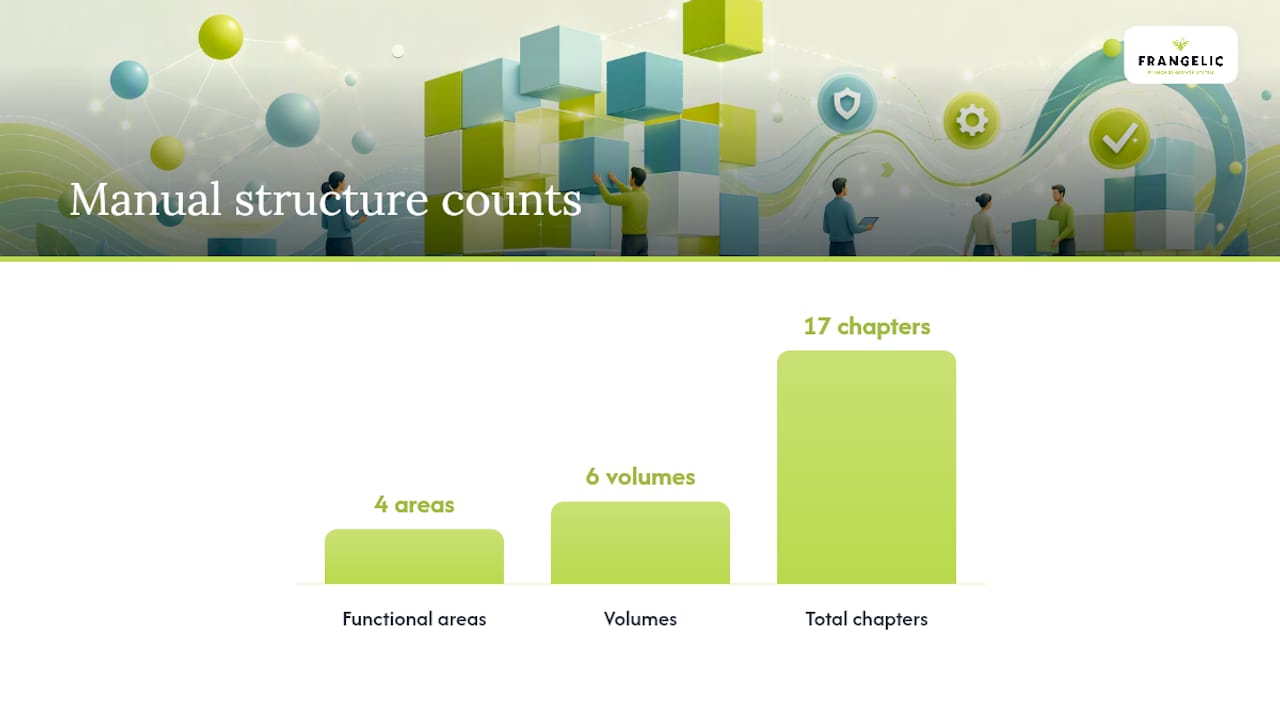
A franchise operations manual is the confidential, authoritative how-to guide you hand each franchisee once the franchise agreement is signed, covering everything from opening procedures to brand standards. The structure that works best isn’t a single monolithic binder. It’s a set of modular volumes, roughly Foundation, Pre-opening, Operations/SOPs, People & Training, Marketing, and Systems & Compliance, each built around audit-ready checklists. Build it in parallel with your legal documents so it lines up with FDD Item 11 from day one.
TL;DR:
- Structuring the manual into modular volumes aligned with legal, training, and operational needs ensures clarity and easier updates, especially for brand standards and SOPs.
- Disclosing the table of contents in Item 11 of the FDD requires the manual’s outline to be accurate and aligned with the final delivered content to avoid legal issues.
- Turning SOPs into digital checklists with photo evidence and timestamps enhances audit readiness and verifies task completion.
- Digital portals or LMS platforms with version control and acknowledgment tracking improve update dissemination and compliance enforcement compared to printed binders.
- Effective manual adoption relies on structured coaching, KPI tracking, and integrating procedures into daily operations to ensure franchisees use and benefit from the manual.
Why Manual Structure Matters More Than Manual Content
Franchisors often obsess over what goes in the manual and skip the harder question: how it’s organized. Structure decides whether the document actually does its three jobs.
First, it’s a legal instrument. Your franchise operations manual gets referenced in Item 11 of your Franchise Disclosure Document, and the table of contents you disclose there needs to match what franchisees actually receive after signing. Sloppy structure creates a gap between what you promised and what you delivered, which is a problem your attorney will not enjoy explaining later.
Second, it’s a training tool. New franchisees and their managers use it as a textbook, and trainers use it as a curriculum.
Third, it enforces brand consistency, which only works if standards are measurable.
- Legal alignment: Item 11 disclosure, incorporation by reference, enforceability under the franchise agreement
- Training function: onboarding curriculum, reference manual, trainer’s script
- Brand consistency: standards you can actually audit and score, not vague aspirations
What Should a Franchise Operations Manual’s Table of Contents Include?
Split the manual into functional volumes instead of one giant document, and franchisees find what they need in seconds instead of hunting through 300 pages. This modular approach also lets you update one volume, say Marketing, without touching Compliance or reprinting the whole thing. A widely used framework organizes the entire manual into 17 chapters across four functional areas: Foundation, Operations, People, and Systems. That grouping maps cleanly onto legal, training, and day-to-day operational needs, and it’s a good starting skeleton for your own version.
Here’s how that skeleton breaks down into volumes:
- Foundation Volume: brand mission, history, org chart, franchisor/franchisee roles and responsibilities, code of conduct
- Pre-opening Volume: site selection criteria, construction and buildout standards, vendor and supplier approval lists, grand opening checklist and timeline
- Operations/SOPs Volume: daily open/close procedures, inventory management, cash handling and reconciliation, equipment maintenance schedules
- People & Training Volume: hiring criteria, onboarding curriculum, certification requirements, ongoing training resources
- Marketing Volume: brand standards for signage and creative, approved local promotion guidelines, co-op advertising rules, social media policy
- Systems & Compliance Volume: POS and technology requirements, safety and regulatory compliance, insurance requirements, audit and reporting procedures
Inside each volume, chapters break further into usable subchapters. The Operations volume, for example, might run: Chapter 1, Daily Opening Procedures (with a line-item checklist); Chapter 2, Cash Handling (deposit slips, reconciliation forms, dual sign-off requirements); Chapter 3, Inventory Management (par levels, ordering cadence, approved supplier contact sheet); Chapter 4, Equipment Maintenance (service schedules, vendor contacts, warranty documentation).
What actually populates each chapter matters as much as the chapter title. Put the approved supplier list with account numbers and reorder thresholds directly in the Inventory chapter, not in a separate appendix nobody opens. Put fillable templates (incident report forms, shift change logs, customer complaint tracking sheets) right where the SOP references them. A franchisee reading the cash handling chapter should never have to flip to page 240 for the form that goes with it.
How Do You Actually Write a Franchise Operations Manual?
Writing the manual is a discovery process before it’s a drafting process. You’re documenting what your best-performing units already do right, not inventing procedures from scratch.
- Interview your top operators. Sit down with the general managers running your highest-performing locations and record exactly how they open, close, and handle rush periods.
- Collect artifacts. Gather the actual checklists, order forms, and shift schedules those units use, since real documents beat descriptions.
- Prioritize by risk. Draft food safety, cash handling, and regulatory compliance sections first. Best practice is to tackle the highest-risk SOPs before anything else, since these are the sections that create liability if they’re missing or vague.
- Assign clear roles. An operations specialist should author the content, franchisor leadership reviews for accuracy and brand fit, and your franchise attorney checks alignment with the FDD and franchise agreement.
- Work on a parallel timeline. The manual should be substantially complete by the time your FDD is issued, not scrambled together after.
Pro Tip: Don’t let one person, even a talented one, write the whole manual alone. The best manuals come from an operations specialist interviewing five or six top performers, then synthesizing their methods, since no single manager has the complete picture of what works across your whole system.
How Do You Make Franchise SOPs Audit-Ready?
A procedure that says “clean the equipment regularly” is worthless to an auditor and worthless to a new hire. Every SOP needs to convert into something scoreable: pass, fail, or a numeric rating.
Take opening procedures. Instead of writing “check that the store is ready to open,” break it into line items: “Front door unlocked and lights on by 7:45 AM, Y/N,” “Register drawer counted and verified against opening log, Y/N,” “Walk-in cooler temperature logged and within range, Y/N.” Best practice calls for turning SOPs into digital checklists with pass/fail or scored items, backed by photo evidence and timestamps so there’s no dispute about whether the task happened.
Practical formats worth building into every operational chapter:
- Opening/closing checklists with timestamped completion
- Temperature logs for food safety verification, photographed at each check
- Cash reconciliation sheets requiring manager sign-off, not just a number written down
- Customer experience recovery scripts with a documented resolution outcome
Franchisors that pair written SOPs with digital checklists and audits close the gap between what the manual says and what happens on the floor. Trend the scores over time. A location that fails temperature checks three audits running needs a corrective action plan, not another reminder email.
What’s the Best Way to Distribute and Update the Manual?
Printed binders quickly become outdated after any procedure update, creating challenges in distributing current information to all units. A searchable digital portal or a learning management system solves that problem, and it lets you track who’s actually opened and acknowledged each update.
- Format comparison: printed binders are cheap but instantly outdated; searchable portals allow real-time updates and search; an LMS adds training modules and completion tracking on top
- Version control: maintain a change log dating every revision, restrict edit access to a small approval group, and archive prior versions for reference
- Update cadence: make minor corrections continuously as issues surface, but run one formal annual review of the entire manual
- Acknowledgment tracking: require an e-signature or digital confirmation for any critical safety or compliance change, and keep that record on file
Digital delivery with access controls and push updates removes most of the friction printed manuals create, and it gives you a paper trail if a franchisee later claims they never received an update.
How Does FDD Item 11 Affect Manual Structure?
Item 11 of your Franchise Disclosure Document requires you to disclose the manual’s table of contents to prospective franchisees, even though the full manual stays confidential until after signing. That means your outline isn’t just an internal organizational tool. It’s a disclosed legal document, and it needs to be accurate at the moment your FDD goes out.
- Disclose the TOC in Item 11; withhold full content until the franchise agreement is executed
- Build the manual alongside your legal drafting, not after, so the disclosed outline doesn’t drift from what franchisees actually receive
- Include clear ownership and modification clauses in the franchise agreement, spelling out that the franchisor retains rights to update procedures
- Get counsel review before every major restructuring, since a manual that no longer matches its disclosed outline can weaken enforceability
Legal counsel generally recommends treating the manual as a living deliverable authored by operations specialists, not a static document bundled once and forgotten.
What Does Practical Manual Adoption Actually Look Like?
A manual sitting unopened in a shared drive changes nothing. Frangelic has spent over 20 years working inside franchise systems, and the pattern holds across brands: documentation without coaching gets ignored, while documentation paired with structured coaching gets used.
- Franchisees coached through a manual’s rollout, with a defined training plan and scorecards, adopt SOPs faster than those handed a PDF and left alone
- Lower support ticket volume is one of the clearest signals a manual is actually working, since franchisees stop calling the help desk for answers already sitting in Chapter 3
- Faster time-to-profitability tends to follow when new owners have both the written procedure and a coach walking them through it
Track adoption with a short KPI set: support ticket volume, time-to-profitability for new units, and audit scores trended over each quarter.
Sources
Start with your franchise attorney for anything touching Item 11 disclosure, since manual-and-FDD alignment is a legal question first. For turning narrative procedures into scoreable checklists, the digital checklist and audit methodology covers photo evidence, timestamps, and corrective action workflows in practical detail.
- The Franchise Operations Manual: What It Includes, What It Costs, and Who Should Prepare It
- How to Create a Franchise Operations Manual (+Free Template)
- How to Write a Franchise Operations Manual: 17 Chapters | The Franchisor Blueprint
Franchisors ready to move from a documented manual to daily execution across every unit can work with Frangelic’s coaching and training system to turn that structure into measurable revenue growth.